
Goat Care Part 1: Reading Symptoms Before You React
WHEN A GOAT LOOKS “OFF”
How to Assess Symptoms Before You Treat Anything
Goats are expressive animals. They tell you when something is wrong, but only if you know how to read the signs. Most new owners jump straight to “parasites” or “minerals” or “coccidia” the moment something looks off. But the truth is simpler.
Before you treat anything, you assess.
This guide teaches you how to evaluate a goat calmly, safely, and correctly so you can understand what the symptoms actually mean. Parasites are only one possible cause. Many other conditions look similar, and some are far more urgent.
This is the foundation of good goat care.

(Photo of my Zach. healthy and happy here. bright eyed and alert. Knowing what “normal” looks like helps you recognize when something is off.
The Dull Goat Moment
Every goat owner eventually has a moment where something feels wrong. A goat stands apart from the herd. The eyes look tired. The coat looks a little rough. The goat is eating, but not with the usual enthusiasm. Nothing dramatic. Just off.
This moment is where good goat care begins.
You do not panic. You do not grab a dewormer. You do not assume the worst. You observe.
I have one buck on my property who deals with chronic acidosis during winter months and is highly sensitive to extreme weather changes. It showed up in him two years ago, and I didn’t catch it early the first time. I was genuinely afraid we were going to lose him because I didn’t recognize the signs soon enough. We are all human, and these things happen. The more you know your animals and their individual personalities, the better you will be able to treat them before a minor situation becomes a major one.
During his first bout of acidosis, he had already reduced his feed and water intake because his gut balance was off for most of the day. By the time I noticed, he was dehydrated, his eyes were sunken, and he was very unwell. I moved him to a quarantine pen and assessed him. That assessment gave me the answers I needed to support him correctly. Because he was refusing water, I had to drench him with a syringe along with other necessary treatments.
Since then, he has had two minor flare ups, always after extreme weather shifts. He doesn’t handle stress from weather fluctuations well, and now I know that about him. The difference now is that I recognize the signs early. When I see he’s off, I assess quickly and usually just straddle him, give an oral dose of B complex and Probios, and he’s fine shortly after.

Photo courtesy of Alyssa Makalea. This goat appears to be resting, but the dropped head and dull expression are early signs something isn’t right.
A Note on Veterinarians and Why This Relationship Matters
Even though this guide teaches you how to assess your goats at home, nothing replaces the value of having a working relationship with at least one veterinarian who understands goats. In many rural areas, goat knowledgeable vets are hard to come by. Some owners have to drive hours. Some have none at all. And recent federal regulations have made it harder for farmers to access medications that used to be readily available over the counter.
This is why building a relationship with a vet is not optional. It is essential.
A veterinarian who knows you, your herd, and your level of experience can:
• Prescribe medications you can no longer legally buy on your own
• Provide guidance during emergencies
• Help you interpret symptoms
• Support you through difficult cases
• Save your goat’s life when minutes matter
This relationship can be the difference between an animal recovering or passing away.
I understand the challenges. I live them too. Many of us are navigating a system where access to goat specific veterinary care is limited. I am actively working with federal and state legislators to help address these issues and restore safe, reasonable access to essential livestock medications. But until those changes happen, your connection with a local vet is one of the most important tools you have.
Even if your vet is not a goat specialist, having someone willing to work with you is far better than having no one at all.
This guide is designed to help you assess, support, and understand your goats. Your veterinarian is there to help you treat them.
Start With Calm Observation
Before you think about parasites, minerals, or illness, you start with the basics. This is your first line of defense.
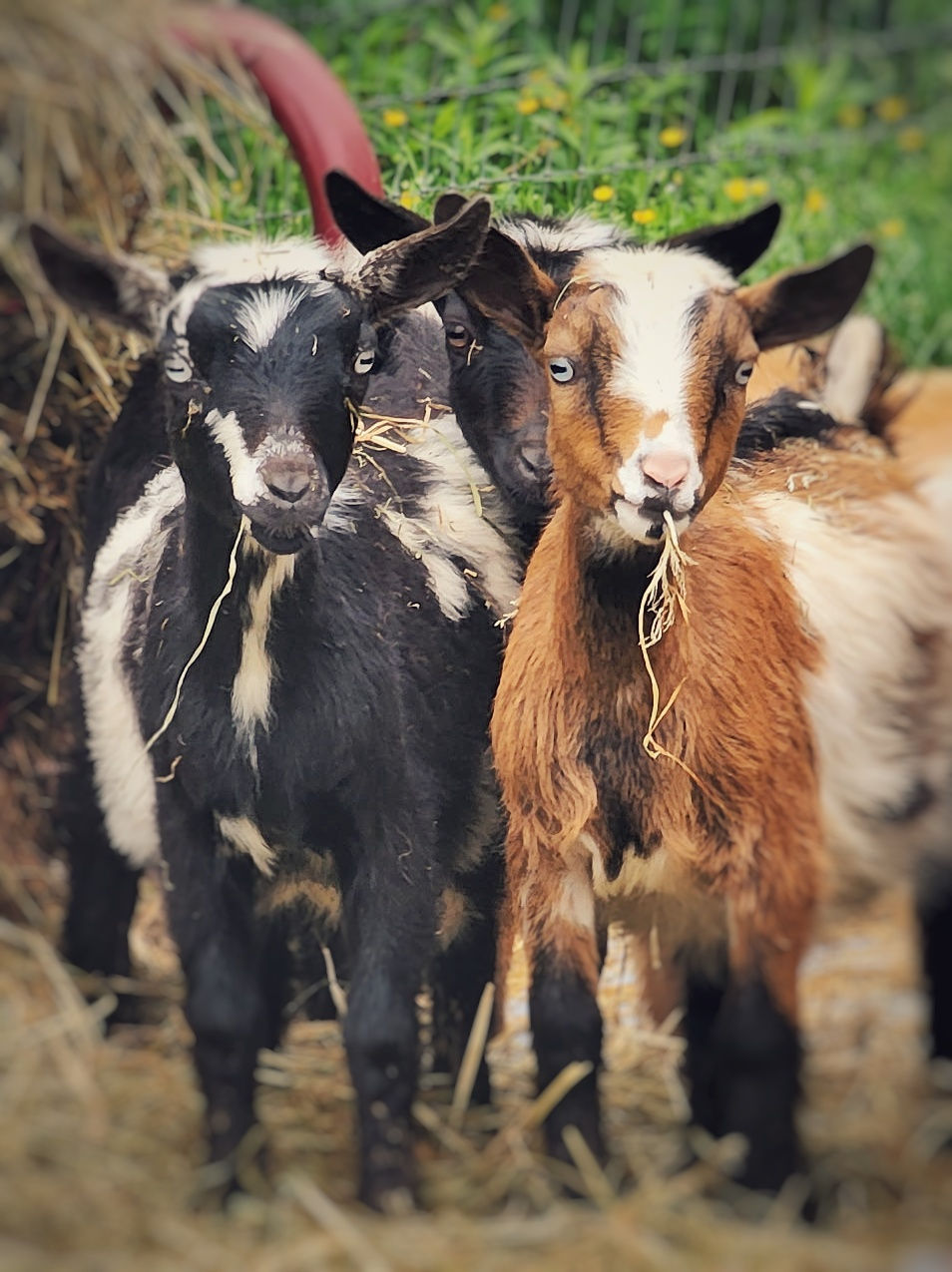
My Girls Rogue & Hodaline happily eating hay and looking to see if i came with treats. Alert, happy and eating.
A. Behavior Check
Ask yourself:
• Is the goat eating normally
• Is the goat drinking
• Is the goat chewing cud
• Is the goat moving normally
• Is the goat interacting with the herd
• Is the goat vocalizing normally
• Is the goat isolating itself
A goat’s behavior often tells you more than any test.
I have had baby goats around 5 to 7 weeks old get upset bellies when their bottles were reduced or when they started eating more hay or fresh grass. Sometimes they simply drank too much from mom. Babies always make us worry, but the key is not to panic.
Baby goats are susceptible to coccidia, absolutely, and it should always be in the back of your mind that something could be more serious. But the fear panic response and throwing the kitchen sink at them is not the best course of action in many cases.
Always assess. Always be observant. Don’t wait until something is wrong to start watching them.
In the case of my baby goats this year, they were stressed from going from three bottles a day to two. They filled that hunger gap with more hay, and that alone upset their bellies. It happens. I watched them. I observed them. Yes, they had runny butts, but they were active, alert, eating, and drinking.
I chose to observe and give basic tummy support instead of panic treating. They got Probios and B complex. I watched their behavior and thought back on the previous days to make the best judgment call.
By watching their behavior, I could see they were not acting sick or distressed. I knew them well enough to know they weren’t in immediate danger and that a slower, more observant approach was appropriate.
Know the signs. Know what is life threatening and what is not. Know when something is about to turn into an emergency so you can act fast enough to prevent it, or if it already is one, get the goat through it safely.

My girl Trixie the day after an upset belly and with only the use of supportive care. Completely alert and playful. She just had a little upset rumen from a diet change.
B. Physical Check
These are the first things you check before assuming anything.
• Temperature
• Hydration
• FAMACHA
• Respiration
• Rumen movement
• Poop
• Body posture
• Skin and coat
• Signs of injury
A goat with a normal temperature and normal behavior is rarely in immediate danger.
How to Check Temperature and Hydration
Temperature
Normal: 101.5 to 103Concerning: 103.5 to 104.5Emergency: Over 104.5 or under 100
A low temperature is often more dangerous than a high one.
Hydration
Check:
• Gum moisture
• Skin tent
• Eye appearance
Signs of dehydration include:
• Sticky gums
• Slow skin tent return
• Sunken eyes
• Dry nose
• Lethargy
C. Environmental Check
Goats react strongly to changes.
Ask yourself:
• Did the weather change
• Did the feed change
• Did the goat experience stress
• Did you move pastures
• Did you trim hooves recently
• Did you wean kids
• Did you introduce new goats
• Did something frighten the herd
Many symptoms are simply stress responses.
What NOT To Do When a Goat Looks Off
When you are new to goats, it is easy to panic and start grabbing anything you have on hand. But acting without understanding can cause more harm than good.
Never administer anything unless you know:
• What it is
• What it does
• What it is used for
• The correct dosage
• The correct route
• The correct frequency
• The risks
• That it is safe for goats
If you cannot answer all of those confidently, do not give it.
Never treat based on fear or guesswork
Fear makes people reach for:
• Dewormers
• Antibiotics
• Herbal mixes
• Baking soda drenches
• Pepto
• Activated charcoal
• Random supplements
None of these should be given “just in case.”
Never assume social media advice is correct
Some advice is excellent. Some is dangerous. Some is outdated. Some is missing context.
Use social media to gather ideas, not to diagnose or treat. Always cross check with veterinary sources.

Photo courtesy of Sundog Valley Farms. This goat arrived with clear signs of mineral deficiency. Correction is a slow, steady process, but she has improved greatly with proper supplementation. Coat changes like this are common and often mistaken for parasites or illness, which is why assessment matters.
Understanding Goat Poop: What It Means and When to Worry
Poop is one of the clearest indicators of what’s happening inside a goat.But not all abnormal poop means parasites, and not all diarrhea means coccidia.
This section teaches you how to interpret poop correctly so you don’t panic treat or overlook something important.
Normal Pellets
• Firm
• Dry
• Separate
Healthy gut.
Soft Clumps
Often caused by:
• Stress
• Weather changes
• Minor diet changes
• Too much grain
• Early gut imbalance
Support first. B complex, Probios, observation.
Dog Log Poop
Often caused by:
• Too much fresh grass
• Too much alfalfa
• Too much mineral
• Sudden diet change
• Mild irritation
Not usually parasites. So support first and monitor.
Pudding Like Poop
Could be:
• Coccidia
• Gut imbalance
• Stress
• Too much milk
• Diet overload
Support first. Observe closely.
Watery Diarrhea
This is serious.
Possible causes:
• Coccidia
• Bacterial infection
• Severe gut imbalance
• Toxic plants
• Parasite overload
Support immediately. Assess hydration. Check temperature .Observe behavior.
Bloody Diarrhea
Emergency. Call a vet.
Rice Grain Segments
Tapeworm.
When to Call a Vet Immediately
Some symptoms require immediate attention, but the right response depends on your level of experience.
If You Are New to Goats
When in doubt, call a vet.
Call immediately if you see:
• Temperature over 104.5
• Temperature under 100
• Goat cannot stand
• Goat is bloated and you do not know how to relieve it
• Goat is crying out in pain
• Goat is neurologic
• Goat is struggling to breathe
• Goat has bloody diarrhea
• Goat is severely dehydrated
• Goat is not urinating or is straining
• Goat collapses suddenly
If You Are Experienced With Goats
Many experienced owners can safely manage:
• Mild to moderate bloat
• Fever
• Early gut imbalance
• Stress diarrhea
• Mild dehydration
• Minor injuries
• Weather related off days
• Early acidosis
• Early pneumonia signs (with vet prescribed meds on hand)
Call a vet if:
• Symptoms worsen
• The goat does not respond to your first line of treatment
• The goat becomes neurologic
• The goat becomes unable to stand
• The goat stops drinking
• The goat’s temperature drops below 100
• You suspect toxicity
• You suspect urinary blockage
• You suspect a broken bone

Photo courtesy of Sundog Valley Farms. This is an example of a vaginal prolapse. It is a true medical emergency that requires immediate veterinary attention. Conditions like this cannot be treated at home and should never be confused with minor issues or parasite symptoms.
Symptoms That Suggest Parasites vs Symptoms That Suggest Something Else
This is the section that prevents deadly mistakes. Many conditions look similar, but the consequences of misdiagnosis can be severe.
A. Symptoms Commonly Linked to Parasites
• Pale eyelids
• Bottle jaw
• Weight loss
• Rough coat
• Chronic cough
• Diarrhea
• Slow decline or poor condition
• Itching
• Hair loss
• Crusty or irritated skin
B. Symptoms That Are NOT Parasites and Are Dangerous to Misdiagnose
Polio
• Star gazing
• Wobbling
• Blindness
• Seizures
Listeriosis
• Circling
• Facial paralysis
• Drooling
Pneumonia
• Fever
• Rapid breathing
• Nasal discharge
Urinary Blockage
• Straining
• Dribbling
• Crying out
Toxicity
• Sudden collapse
• Tremors
• Vomiting
Selenium Deficiency
• Weakness
• Difficulty standing
Injury
• Limping
• Swelling
If you treat these like parasites, the goat may die.
Some conditions mimic one another. Polio, listeriosis, and meningeal worm can look similar. In emergency situations where a vet cannot be reached, dual treating for all three is common and safe.

This is our buck Wall‑E on the evening lock up and check we found him staggering with a drooped ear. His symptoms matched polio, listeriosis, and meningeal worm, so he was treated for all three immediately. It took two weeks of round the clock injections, and he worsened before he improved, but fast assessment and fast action saved him. He is now fully recovered and back to normal. Neurologic symptoms are always an emergency and should never be mistaken for parasites.
Parasites: One Category of Many Possible Causes
Parasites are only one piece of the puzzle.
Categories include:
• Strongyles
• Coccidia
• Trematodes
• Lungworm
• Meningeal worm
• External parasites
Each will be covered in detail in a future post.
There are many roads to the same end result. Some conditions have only one correct treatment, but many have several options. Choose what works for your farm, your comfort level, and your animals.
Safe First Steps for Any Sick Goat
These steps are always safe and never harmful.
• B complex
• Probios
• Electrolytes
• Fresh water
• Hay
• Quiet environment
• Observation
• Remove pellet feed
Assess First. Support Next. Treat Last.
This is the safest, most effective order for goat care.
You assess to understand the problem. You support to stabilize the goat. You treat only when you know what you are treating.
In Conclusion
My goal is to help you become observant and able to recognize signs before they become emergencies, and to know how to treat conditions when they arise. I am not a veterinarian. The information I share is based on years of research and hands on experience.
Always do your own research. Read veterinary and scientific sources. Establish a working relationship with a vet if you can. Nothing in this guide replaces a ruminant veterinarian’s expertise. I am simply sharing what I know so you can make informed, safe decisions for your herd.

Comments